; stuff - anything from a semicolon to the
; end of a line is a Racket COMMENT, and will
; be ignored!
;=====
; expression: a "chunk" that has meaning in
; a programming language
;=====
; simple expression: the simplest form of
; expression
; what you can DO with an expression
; is based on its DATA TYPE
; the syntax of a simple expression
; determines its data type
;=====
; for data type number, I must follow
; Racket's syntax rules for its
; number type -- 1 or more digits,
; possibly started with a -,
; possibly containing ONE decimal point:
4
10000
42
42.20
000003
.00003
-34
-3.4
; data type string: anything in double-quotes
; is considered a simple expression of
; type string
"moo"
"duck"
"Zeke"
"-34"
;=====
; Boolean type: #true #false
#true
#false
;=====
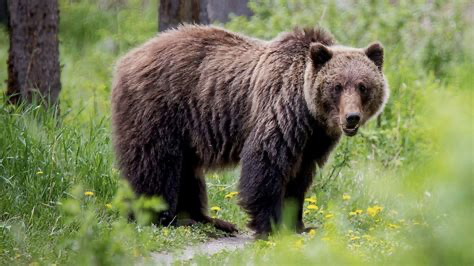
; and image is supported as a simple
; expression type in Racket
; if you copy an image DrRacket, it is considered
; a simple expression of type image
 ;=====
; compound expressions!
; in Beginning Student Language (BSL)
; Racket, a compound expression has
; THIS syntax:
; (operation argument-expression1
; argument-expression2
; ...
; )
;
; * the argument expressions following
; the operation are separated by blanks
; or newlines (not commas!)
;
; * the data type of a compound expression
; is the data type of the value its operation
; computes, of the value its operation
; RETURNS
;
; * how many argument expressions you can have
; depends on the operation -- each operation
; expects a particular number and type
; of argument expressions
;=====
; SO -- what kind of operations are available in Racket?
;
; * has some built-in operators
; * has some built-in functions
; * has some available modules, collections or
; libraries of additional operators and functions
; * AND... you can write your OWN operations, your own
; functions! <-- starting next week!
;
; here are a FEW of the built-in operations...
;=====
; arithmetic operators!
; * such as: + - * /
;
; * these expect two or more argument expressions,
; each of type number,
; and return a number that is the result of
; performing that arithmetic operator on
; those argument expressions
(+ 4 3 7 42 20 17 10000 500 1 19)
(- 4 3)
(* 4 3)
(/ 4 3)
;=====
; some operations return types other than number,
; and some operations have names -- these are FUNCTIONS!
;=====
; string-append expects two or more argument
; expressions of type string, and returns
; a single string expression consisting
; of the values of its arguments appended
; (smushed) together
(string-append "me" "ow")
;=====
; operator = expects two or more arguments of type
; number, and returns whether all of
; its arguments have the same value
(= (- 4 3) 1)
;=====
; the require funcction is special --
; it expects the name of a Racket module,
; a collection of Racket definitions,
; and it returns NOTHING (!!),
; BUT has the SIDE-EFFECT of making
; those definitions available for use in
; the rest of this Definitions
; window/in expressions in the rest of
; this .rkt file!
; 2htdp/image is the image library provided
; by the "How to Design Programs", 2nd edition
; text!
(require 2htdp/image)
;=====
; one operation 2htdp/image provides is a
; star function --
; it expects the desired distance between
; a 5-pointed star's points in pixels,
; a style string "solid" or "outline",
; and a color, and it returns an image
; of a star of that size, style, and color!
(star 30 "solid" "purple")
;=====
; compound expressions!
; in Beginning Student Language (BSL)
; Racket, a compound expression has
; THIS syntax:
; (operation argument-expression1
; argument-expression2
; ...
; )
;
; * the argument expressions following
; the operation are separated by blanks
; or newlines (not commas!)
;
; * the data type of a compound expression
; is the data type of the value its operation
; computes, of the value its operation
; RETURNS
;
; * how many argument expressions you can have
; depends on the operation -- each operation
; expects a particular number and type
; of argument expressions
;=====
; SO -- what kind of operations are available in Racket?
;
; * has some built-in operators
; * has some built-in functions
; * has some available modules, collections or
; libraries of additional operators and functions
; * AND... you can write your OWN operations, your own
; functions! <-- starting next week!
;
; here are a FEW of the built-in operations...
;=====
; arithmetic operators!
; * such as: + - * /
;
; * these expect two or more argument expressions,
; each of type number,
; and return a number that is the result of
; performing that arithmetic operator on
; those argument expressions
(+ 4 3 7 42 20 17 10000 500 1 19)
(- 4 3)
(* 4 3)
(/ 4 3)
;=====
; some operations return types other than number,
; and some operations have names -- these are FUNCTIONS!
;=====
; string-append expects two or more argument
; expressions of type string, and returns
; a single string expression consisting
; of the values of its arguments appended
; (smushed) together
(string-append "me" "ow")
;=====
; operator = expects two or more arguments of type
; number, and returns whether all of
; its arguments have the same value
(= (- 4 3) 1)
;=====
; the require funcction is special --
; it expects the name of a Racket module,
; a collection of Racket definitions,
; and it returns NOTHING (!!),
; BUT has the SIDE-EFFECT of making
; those definitions available for use in
; the rest of this Definitions
; window/in expressions in the rest of
; this .rkt file!
; 2htdp/image is the image library provided
; by the "How to Design Programs", 2nd edition
; text!
(require 2htdp/image)
;=====
; one operation 2htdp/image provides is a
; star function --
; it expects the desired distance between
; a 5-pointed star's points in pixels,
; a style string "solid" or "outline",
; and a color, and it returns an image
; of a star of that size, style, and color!
(star 30 "solid" "purple")